The post DRIVERS policy briefs to improve health equity through policy and practice appeared first on Health Gradient.
]]>They gather the latest evidence from the project, provide a synopsis of the issue, solutions, and opportunities to advocate. The briefs have been informed by the findings of work on advocacy for health equity, and are meant for policy makers and practitioners at the European, national and sub-national levels. Translations of the policy briefs into several different European languages are under way, and will be made available from the Translations page.
Download links:
- Early Child Development - Universal, quality early childhood programmes that are responsive to need promote better and more equal outcomes in childhood and later life.
- Fair Employment - Improvements in quality of work, particularly for people in lower occupational groups, would contribute to a significantly healthier and more productive Europe.
- Income & Social Protection - Well-designed social protection systems can improve the lives of people and reduce health inequalities.
Slideshare links:
The post DRIVERS policy briefs to improve health equity through policy and practice appeared first on Health Gradient.
]]>The post European policy makers support DRIVERS solutions to tackle health inequalities appeared first on Health Gradient.
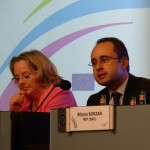
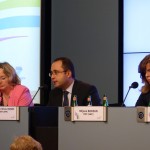
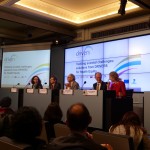
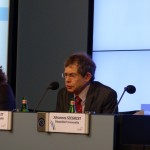
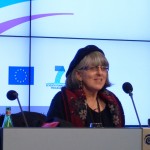
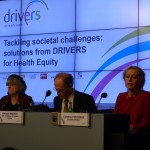
]]>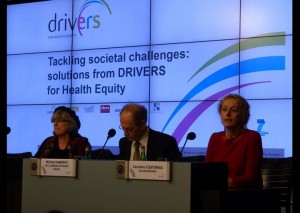 The event, co-hosted by Julie Ward MEP (S&D, UK) and Eider Gardiazabal Rubial MEP (S&D, ES), brought together European and national policy-makers, civil society, industry and academics to discuss how DRIVERS’ latest evidence can be taken forward and integrated into existing and future policy initiatives.
For more than three years, scientists, civil society organisations, and representatives from public health and businesses have collaborated to explore how health equity can be improved across policy sectors, through action on three of the most important drivers of health: early childhood, employment & working conditions, and income & social protection.
As a result of their efforts, DRIVERS has identified four principles by which decision makers can design better and ‘healthier’ policies addressing the challenges of our time to help create a fairer Europe. These overarching principles can be applied to any policy context and can bring potential added value especially during times of crisis and cuts to public social spending.
Prof. Sir Michael Marmot in his keynote speech outlined how the principles of ensuring universalit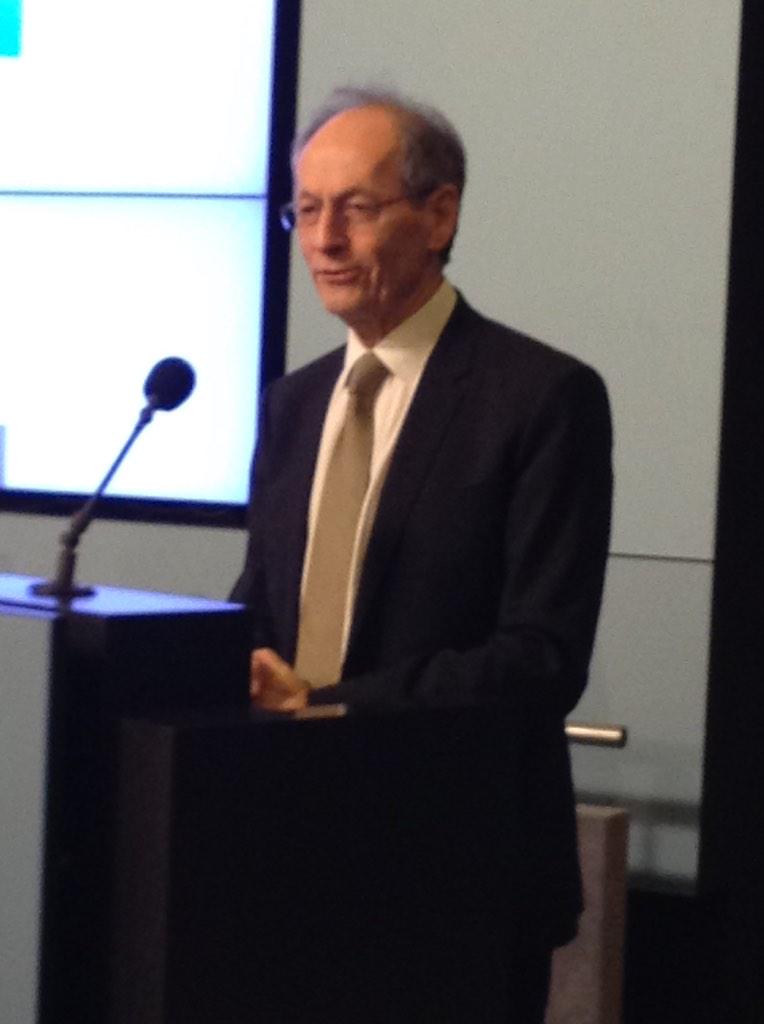 y of access to services while addressing disadvantage, accounting for context and respecting rights of people concerned and ensuring that policies are evidence-based can guide the development and implementation of policies to improve health and reduce health inequalities.
Application of these principles would enable children and families to live better and have adequate social protection coverage, enable workers to stay in the labour market for longer, improve productivity at work, reduce social exclusion and, hence, foster greater social cohesion.
The importance of the life-course should be taken into account in the application of these principles as social inequalities start having an impact on individuals before birth, through early childhood and through life, influencing later life chances and outcomes. Moreover, the systematic deprivation of health for certain social groups, denying them the possibility to participate fully in economic and social life, results in even worse health.
The conference was composed of a scientific and a policy expert panel. During the first panel on taking stock of the evidence base advanced by DRIVERS, representatives from three DRIVERS’ partners (University of Dusseldorf, Centre for Health Equity Studies & University College London) explained how the DRIVERS project enabled them to gain new insights on employment, social protection and early child development & inequalities within and between different EU countries. 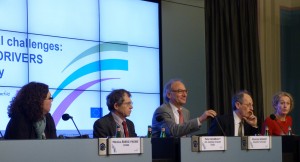
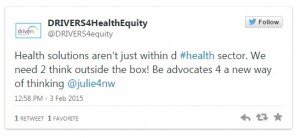 Throughout the discussions, there was a general consensus that solutions to improve health equity solutions do not simply reside within the health sector and that public spending should strengthen sustainable employment and address health-adverse working conditions.
Moreover, other messages echoed that more spending on active labour market policies is correlated with better jobs and lower health inequalities in the same way that more spending on unemployment benefits is linked to a narrower social gradient in health.
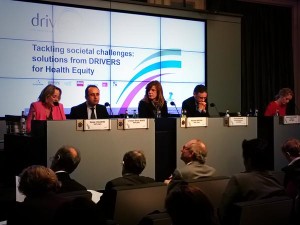
In the panel dedicated to policy and how recommendations from DRIVERS can be taken forward to inform EU policy agendas, members of the European Parliament argued that the European Parliament's work can help improve health, but real moves towards health equity require action across sectors and at different levels of governance.
The DRIVERS policy recommendations received broad support and endorsement and several EU policy makers, including a member of the Social Protection Committee, and made concrete proposals and commitments to taking them forward.
Conference co-host Eider Gardiazabal Rubial MEP pledged to make efforts to ensure that the Commission and the Council boost investment in social and health needs and continue to tackle inequalities rather than allow a widening of existing disparities as a result of the crisis.
Ralf Jacob (DG EMPL, European Commission) stated that DRIVERS’ recommendations are in synergy with many of the Commissions priority areas. He also argued that the mid-term review of the Europe2020 Strategy represents a real opportunity for using new knowledge to inform the next phase of the Strategy.
All in all, the conference was an excellent opportunity to disseminate the latest pan-European evidence arising from the DRIVERS project and stimulate debate on how action to help reduce health inequalities across sectors can be maximized.
Reducing inequalities and enhancing social cohesion during this economic climate requires collective commitment and co-operation. DRIVERS and EuroHealthNet, a network of agencies and organisations dedicated to improving health equity across Europe, would like to thank all those who have supported us in the execution of our work within DRIVERS. Following the conference, interviews were conducted with several of our speakers. Video footage will be available soon.
“DRIVERS’ recommendations are impressive, very detailed, evidence-based, and integrated across the life course…” Rudi Van Dam (Social Protection Committee)
Did you miss the DRIVERS conference and want to know more? Please visit our Storify page (see below), which summarises the conference key messages that were produced via Twitter.
The news release issued following the conference can be found here.
The key note speech by Sir Michael Marmot can be found here.
The policy recommendations document 'Improving health equity through action across the life course' can be found here.
More information on DRIVERS publications (policy briefs, reports) can be found here. The policy recommendations and policy briefs are currently being translated into several European languages and will be available shortly.
For more information, please contact us at [email protected]













































The post European policy makers support DRIVERS solutions to tackle health inequalities appeared first on Health Gradient.
]]>The post “It is time to break the link between disadvantage & poor outcomes” – EV Healthcare features DRIVERS appeared first on Health Gradient.
]]>Pressure mounts for added focus on how social context impacts on health outcomes
An ambitious call to improve Europeans' health by major shifts in social spending marked the conclusion of the EU-funded "Drivers for health equality" project in early February. "It is time to break the link between disadvantage and poor outcomes", UK epidemiologist Michael Marmot told a meeting in Brussels organised by EuroHealthNet, the project coordinator. Outlining the findings that early childhood, employment, and income and social protection were crucial factors in health, he said the evidence was clear, "but a lot of policymakers couldn't care less about evidence-based policies". Marmot, who will take over as president of the World Medical Association this year, made clear that he intends to take the message to colleagues: "Doctors should think about real health determinants", he said.
The project's recommendations include the familiar call for coherent policy responses across governments, ranging from wider access to welfare and education to interventions in the workplace and deeper research. Marmot argued that this project could have an effect. "Can we do anything about it? Yes we can!", he said. Despite the powerful "countervailing forces" – he cited increased inequality and the record levels of concentration of wealth – "people are listening ", he insisted, and at the most senior levels of government the recognition is growing that extreme inequalities are unacceptable. But the consequences could be a realignment of where power over health policy lies, he suggested. The actions of finance ministers in redistribution of wealth through social protection initiatives could have a more dramatic positive impact on citizens' health than many classic health-focused policies.
Reproduced with permission. Copyright 2014 by European Voice SA.
EV Healthcare is a "fortnightly professional email newsletter, (which) gives a unique insight into policy formation among national and European authorities, the healthcare industries, the research community, and patient organisations".
The post “It is time to break the link between disadvantage & poor outcomes” – EV Healthcare features DRIVERS appeared first on Health Gradient.
]]>The post Important stakeholders provide valuable input and feedback to DRIVERS’ policy recommendations appeared first on Health Gradient.
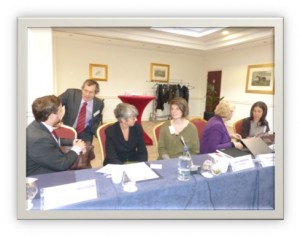
]]>The stakeholders represented the: Belgian Federal Public Service (FPS) for Health, Convention of Scottish Local Authorities (COSLA), European Federation of Public Service Unions (EPSU), European Agency for Safety and Health at Work (EU-OSHA), European Commission DG Education and Culture (EAC), DG Employment, Social Affairs & Inclusion (EMPL), DG Justice (JUST) and DG Research & Innovation (RTD), International Labour Organization (ILO), the Network of European Foundations (NEF), Organisation for Economic Co-operation and Development (OECD), Permanent Representation of the Slovak Republic to the European Union, Social Platform and Vlaams Instituut voor Gezondheidspromotie en Ziektepreventie (ViGEZ).
The aim of the event was to take stock of the research findings and to refine and hone project recommendations. It was therefore an excellent opportunity to receive feedback on the overall package of research and policy links developed by the project to date, raise the profile of the project among key stakeholders and to broaden the potential base of support.
Clive Needle (EuroHealthNet) chaired the seminar and led the round-table discussions on how to maximise the impact of the project’s recommendations in policy processes. Participants were invited to share their views and provided feedback on how DRIVERS could contribute to processes at the EU, national and sub-national levels beyond the lifetime of the project.
Introducing the project’s approach to promoting health equity, Peter Goldblatt, (Institute of Health Equity, UCL) described the importance of taking a life-course approach in understanding the three DRIVERS areas, and how carefully implemented interventions and policies in these areas can improve health equity. These were based on four key principles: universality, responding to disadvantage, adaptation to context, and drawing on data from different sources and countering the ‘information paradox’ (whereby the least data exists for countries with the greatest need to reduce health inequalities).
The seminar sparked interesting and fruitful discussions on how to bridge the gap between research and policy and there was focused debate on how recommendations could be tailored to different audiences.
Project partners welcome the valuable suggestions put forward by the seminar’s participants and will take them into full consideration in developing the final recommendations and other dissemination activities.
Seminar presentations are available here.
For more information please contact us at: [email protected]
The post Important stakeholders provide valuable input and feedback to DRIVERS’ policy recommendations appeared first on Health Gradient.
]]>